
Why Your Drive for Results is Slowing You Down
If you are running a substantial division or a scaling business, you almost certainly got there because you know how to make things happen. You have a high capacity for work, you tolerate an immense amount of pressure, and you possess a relentless focus on delivery. In the architecture of leadership, this is called The Will, representing the pure kinetic energy of execution.
This drive is a spectacular asset. Early in your career, it was your primary superpower. When a critical system went down or a project timeline started to slip, you were the person who grabbed the wheel, stayed up all night, and dragged the team across the line through sheer force of personality.
The trouble starts when the scale of your operation outgrows your personal bandwidth. When you are managing hundreds of people or navigating complex corporate politics, you can no longer survive on individual exertion. Yet, when the stakes get high and the pressure mounts, your internal operating system defaults to what it knows best. Instead of scaling your leadership, you simply tighten your grip.
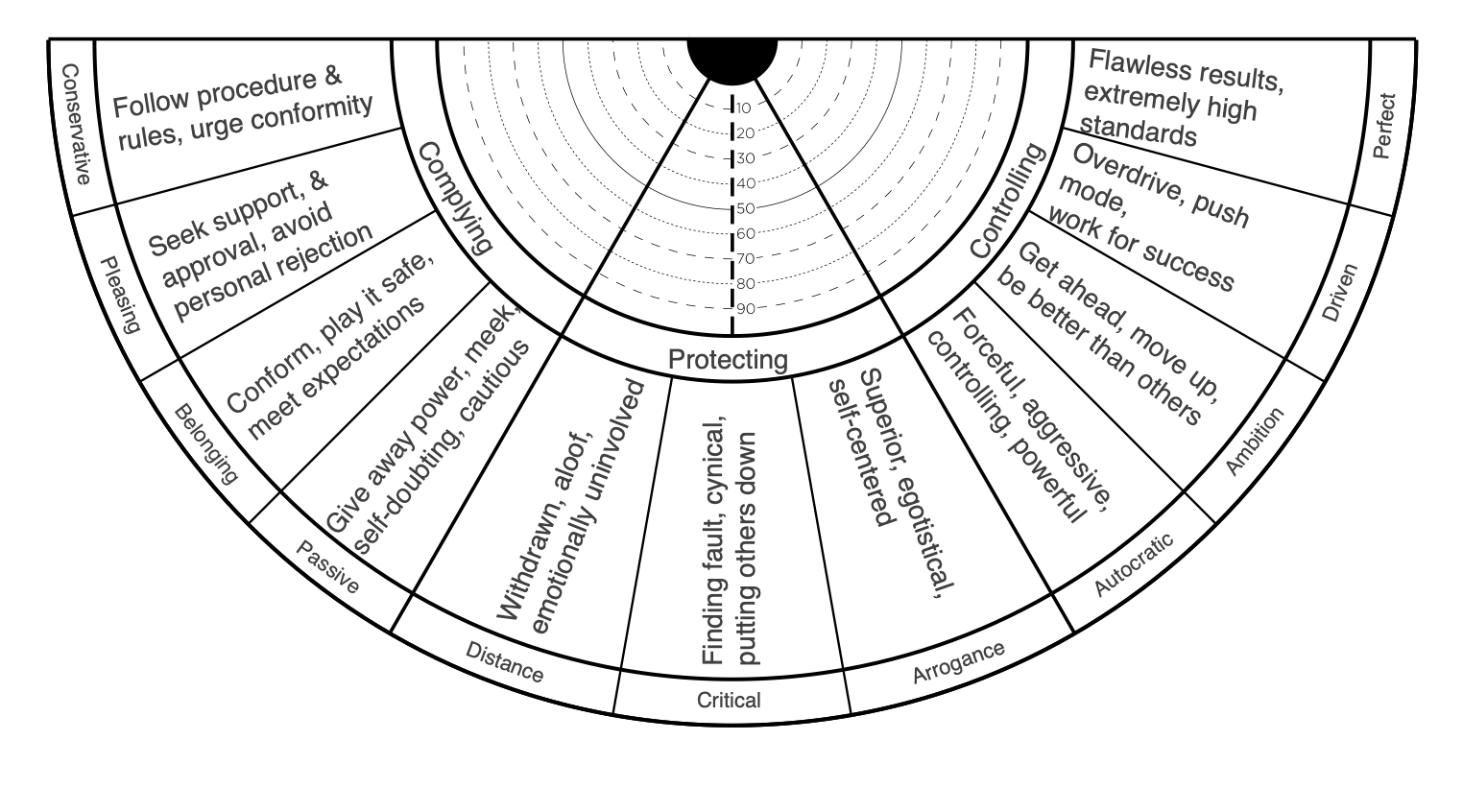
The 11 Reactive Tendencies shown on the Leadership Circle Profile
The Perfectionist Badge of Honour
On the Leadership Circle Profile wheel, this tightening shows up in the lower Reactive hemisphere as a combination of Controlling and Perfecting tendencies. I work with many executives who wear these exacting standards as a literal badge of honour. They view their relentless pursuit of flawless results as an unalloyed virtue. The idea that there could be a negative consequence to this mindset has genuinely never entered their minds. After all, that desire for success and perfection is exactly what has driven their greatest achievements and improvements to date.
The deep blind spot here is that perfectionism is actually an assumption that overextends a genuine strength. For many leaders, the idea of accepting anything less than perfect is almost impossible to even contemplate. This is because their internal operating system has tightly coupled their core personal worth and security with performing constantly at heroic levels and succeeding beyond all expectations. When your very identity is tied to flawless execution, a minor imperfection feels like an immediate threat to your professional survival.
Because letting go feels psychologically unthinkable, you end up creating a trap that ultimately reduces the performance of your entire organisation. You set unrealistic standards of performance for your team and become completely unable to delegate without micromanaging people down to the most minor detail. This constant intervention communicates a total lack of trust in their capability.
You eventually find yourself completely overwhelmed by the elaborate reporting and review systems you constructed to keep yourself safe. This high control actively undervalues the human element of leadership, eroding team trust and collaboration until your people completely stop bringing original perspectives to the table. You wanted an agile, high-performance machine, but your inability to tolerate minor imperfections has architected a culture of passivity.
Shifting to Achieving
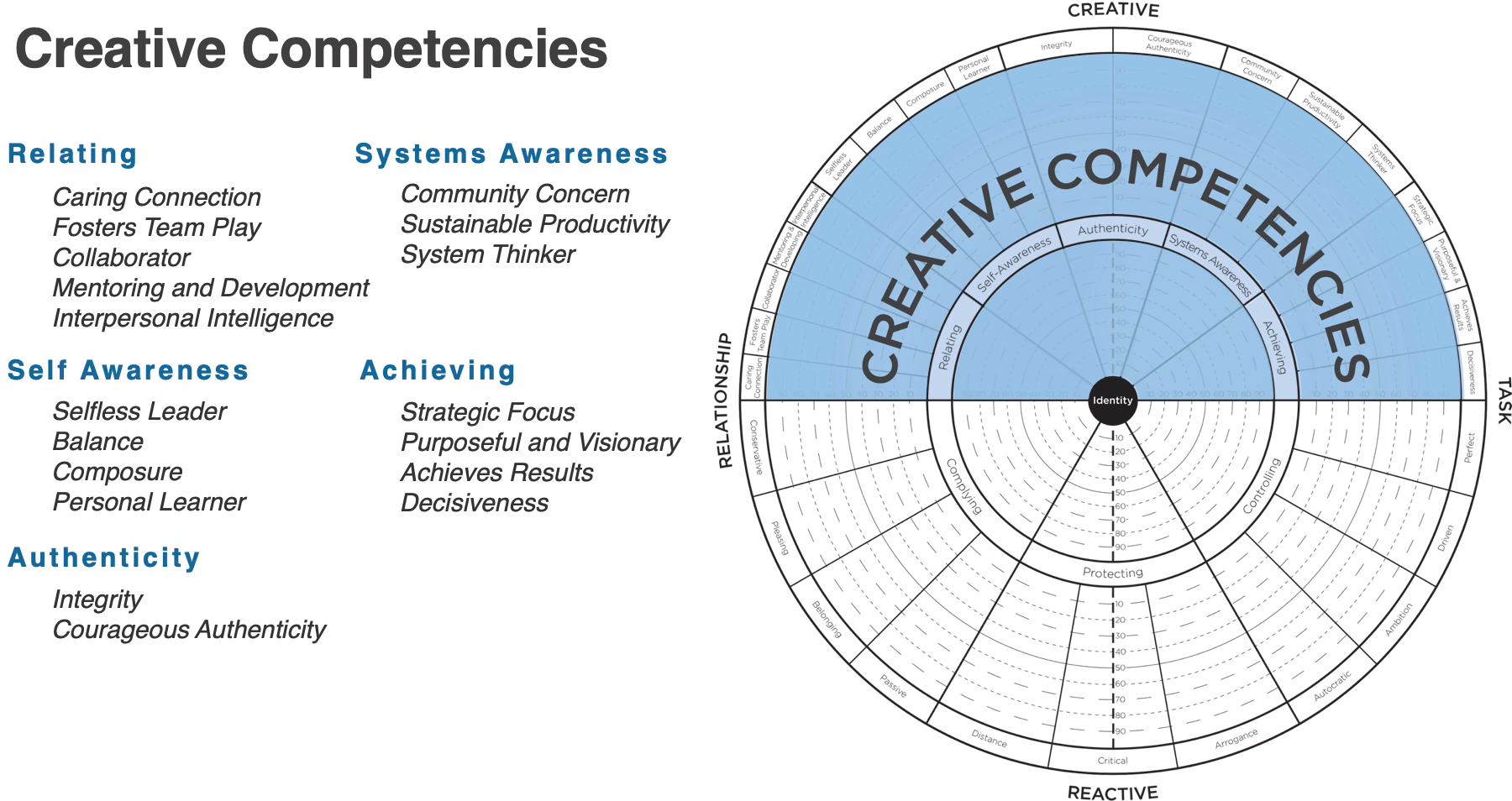
Vertical development is the process of moving from that lower half of the wheel to the upper Creative half, shifting focus from Controlling to Achieving. This requires a fundamental pivot in how you configure your identity. A Reactive leader uses task accomplishment to manufacture a temporary sense of worth. A Creative leader operates from the internal premise that personal worth is inherent and completely independent of external circumstances.
When you anchor your identity internally, your motivation flips. You stop using your drive to protect your optics or chase admiration. Instead, you create out of a genuine purpose and a love for the process of building.
This shift does not mean you lose your edge or become a soft manager. You keep every ounce of your focus on goal achievement and high performance. However, you change how you deploy that energy. You move from individual execution to systemic influence, translating vision into strategies and goals that raise the level of play for everyone around you. You stop using your willpower to push the cart, and you start focussed your energy on removing the structural friction that is slowing the whole team down.
The Bywater Bit
In my coaching work at Bywater, this wrestling match is where we spend a huge amount of time with ambitious executives. It is terrifying to let go of the steering wheel when you have spent a lifetime believing that your survival depends on being flawless.
We work on upgrading that internal operating system. We look at the underlying beliefs that force you into overdrive, and we help you build the creative capacity to lead through others. When you finally bring your drive for perfection into realistic balance, you stop being the bottleneck and you start being the catalyst for real organisational velocity.
A question for this week: Where are you hoarding authority this week under the guise of maintaining standards, and what is that tight grip actually costing your team's velocity?
Read the previous post: The Leadership Map: Putting Data Behind Your Shadow
Work with Bywater
Moving from individual control to systemic achievement requires a rigorous, data-driven approach. I work with senior leaders and executive boards across the UK to map their leadership architecture, break through personal bottlenecks, and scale their organisational impact.