
The Forgotten Charter
It is the first week of a new quarter. The team offsite has been in diaries for weeks, accompanied by weekly planning calls to shape the agenda. These calls typically involve a member of the leadership team alongside a few junior colleagues from the extended team, routinely generating requests for vague qualities like high energy, fun, and immediate impact.
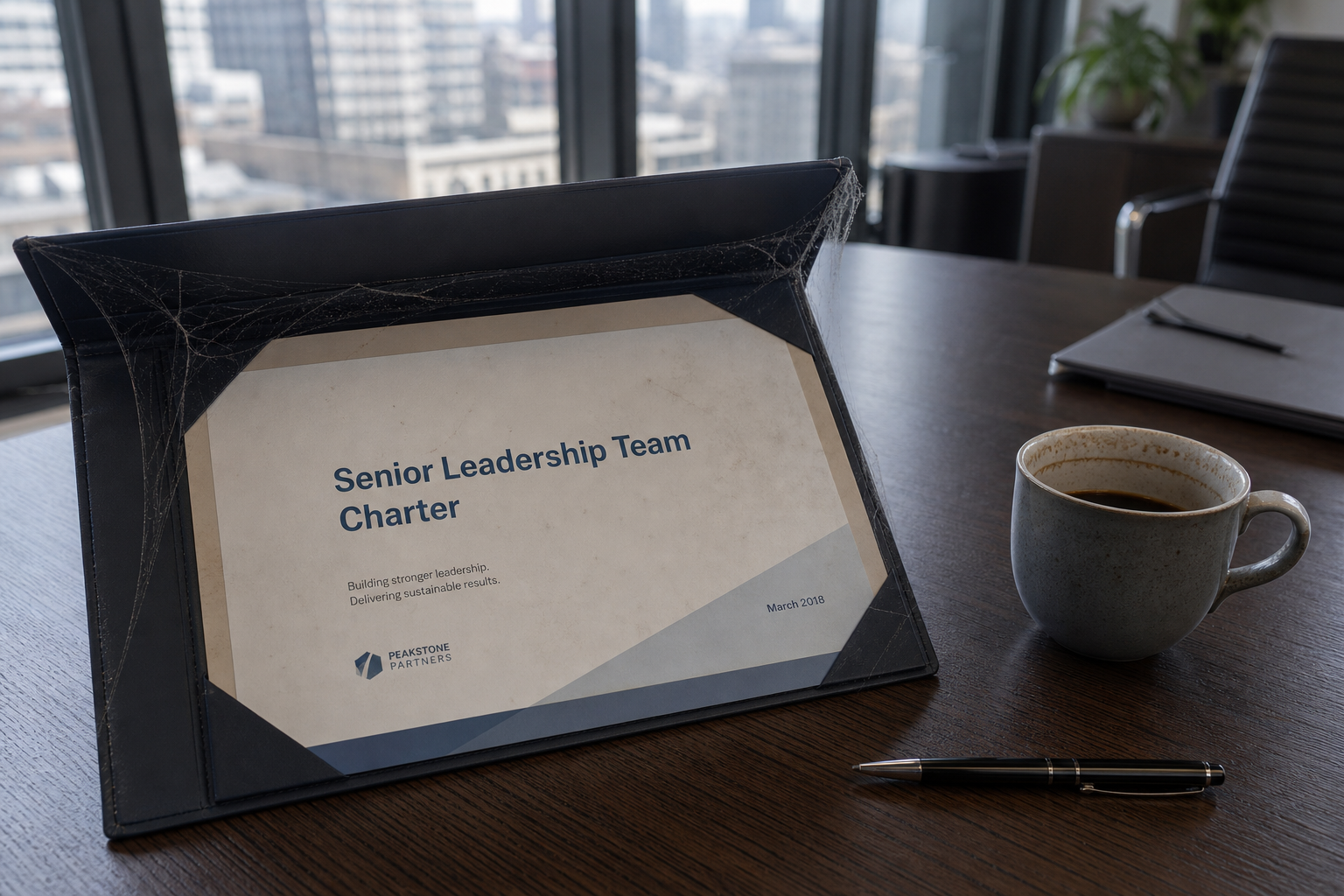
Searching for the previous agenda with the quiet hope of changing the date and passing it off as new, someone stumbles across a file last updated over a year ago. Double-clicking to open it, they are met with outdated corporate branding. Scrolling further, they find the Senior Leadership Team Charter: a relic created during a dedicated day-long workshop, completely untouched ever since. "Bingo," they think, accompanied by an arched eyebrow that Tim Curry would be proud of…
This scenario is familiar across large institutions. Executive teams frequently dedicate valuable time during retreats to defining visions, establishing strategic pillars, and drafting team charters. Once approved, these documents are briefly included at the front of monthly packs before being quietly forgotten. When daily operational pressure returns, individual functional priorities resume dominance, and the charter becomes a digital artefact rather than an active guide.
The Bywater Insight
In Peter Hawkins’ 5 Disciplines framework, the second discipline is Clarifying. Once a team understands its external commission, it must establish explicit internal goals, individual roles, and shared priorities.
A static slide deck does not create collective alignment, but it does often make teams think that they have it! True alignment requires creating the right conditions within the team rhythm so shared purpose actively guides daily choices. Clarifying is an ongoing discipline. It moves leadership teams past decorative declarations, establishing clearer thinking and providing a practical baseline for resource allocation and healthier challenge.
Don’t get me wrong, I’m not saying don’t create a team charter. What I’m saying is that if, as a leader, you don’t continually reinforce it and stop to challenge things when alignment to it drifts. Then you are wasting everyone’s time.
Practical Application: Moving from Static Artefacts to Active Governance
Here are four evidence-informed steps to make collective clarity a live operating model:
Use Your Purpose as an Explicit Decision Filter: Bring your agreed objectives directly into weekly operational discussions. When competing priorities emerge between divisions, evaluate trade-offs against collective goals rather than individual divisional targets.
Apply the 'Only We Can Do' Filter: Audit executive agendas to separate functional updates from strategic choices. Operational updates belong in divisional reviews; board time should focus on issues strictly requiring the combined judgment of the leadership team.
Define Decision Boundaries Early: Ambiguity surrounding authority causes quiet friction between senior roles. Detail where functional responsibilities overlap and agree explicitly on decision rights before operational pressures mount.
Review Working Agreements Continuously: Treat operational charters as dynamic frameworks. Establish a quarterly rhythm to test whether team priorities reflect current business demands, adjusting agreements to support progress that holds.
The ‘Better Thinking’ Question
When your leadership team faces a high-stakes trade-off, does your agreed purpose guide the choice, or do individual divisional priorities take over?
Work with Bywater
Moving an executive team past static declarations and into live alignment requires structure, honesty, and clear direction. I work with senior executives, boards, and HR leaders across the UK to help teams clarify their collective priorities, resolve structural friction, and build the right conditions for sustained progress.