
Beyond Detachment: The Courage to Step Out from Behind the Expert Persona
Over the last month, we have used the Leadership Circle Profile to examine senior executive performance. We have tracked how our greatest professional assets can turn into liabilities when the pressure mounts. In week two, we watched a healthy drive for results slide into a controlling grip. Last week, we examined how a capacity for connection can get hijacked by a need for compliance. This week, we conclude our series on the leadership shadow by turning to the final defensive posture running on our internal operating system: the intellect.
Inside large institutions, analytical sharpness is highly prized. Many senior leaders built their reputations on being the person who can spot a structural risk or identify a flaw in a business case faster than anyone else. This capability is exceptionally effective early in a career. However, when you step into executive tiers defined by strategic ambiguity rather than concrete data, relying purely on intellect changes from an advantage into a defensive boundary. You begin to use your expertise to maintain a safe distance from the messy realities of operational delivery.
The Bywater Insight
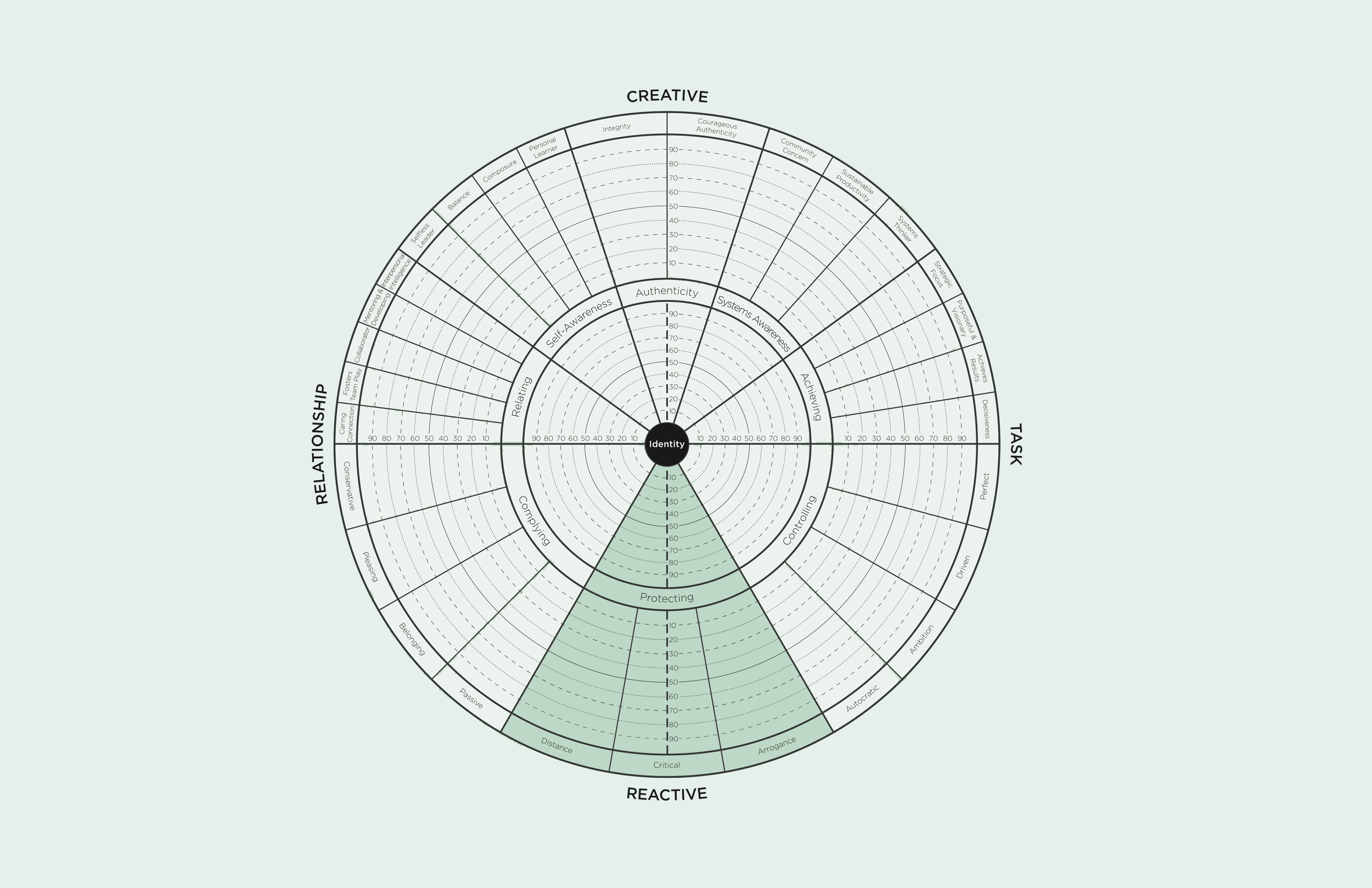
The Leadership Circle Profile categorises this defensive withdrawal as the Protecting default. It forms the final segment of our reactive operating system, sitting in the lower half of the map. This stance occurs when a natural capability for critical analysis overextends to safeguard your professional standing. When you feel exposed in a volatile corporate landscape, your internal operating system convinces you that staying detached and maintaining an air of superior expertise is the safest option.
In reality, this pattern is quiet and rarely feels like deliberate detachment. Instead, it manifests as a preference for further data analysis, an unstated decision to stay quiet during cross-functional disputes, or a habit of pointing out historical precedents where similar initiatives failed. To the person leading, this approach feels like wise governance and necessary risk mitigation. You view your scepticism as a vital counterweight to the unvetted enthusiasm of the room, completely unaware that your team experiences this caution as a structural barrier to new thinking.
The organisational consequence is a quiet culture of intellectual cynicism. Your direct reports quickly learn that presenting a fresh perspective carries too much professional risk because it will simply be dismantled by the resident expert. They begin to hide operational mistakes and cover up delivery problems to escape your criticism. While you might believe you are fostering high standards, you are actually building a bottleneck of collective inertia.
Sustained progress requires moving this energy to the upper Creative hemisphere into Self-Awareness and Authenticity.
Self-Awareness in this context involves a clear understanding of your own emotional state and behavioural triggers. It allows you to notice the exact moment you begin retreating into a defensive posture or using data as a shield before that choice impacts the wider team.
Authenticity relates to your capacity to lead from a position of core values rather than political safety. It manifests as a willingness to admit the limits of your own knowledge and to engage in honest dialogue without the need to project an image of infallibility.
This transition allows you to maintain your analytical sharpness while anchoring your identity internally so you no longer need to appear flawless. When you step out from behind the expert shield, your analytical sharpness shifts from judging ideas to building solutions. This changes the environment and establishes the right conditions for clearer thinking, allowing your team to experiment and innovate without the fear of being intellectually outmatched by their own leader.

Practical Application
Catch the automatic critique. When a colleague or direct report presents a new strategic option, notice your immediate verbal response. Restrain the habit of pointing out why it will fail, and ask what conditions are required to make the initiative successful.
Move from observer to participant. Avoid the detached language of the external critic during cross-functional executive meetings. Instead of describing organisational failures as problems belonging entirely to other business units, explicitly state your own accountability in resolving the system bottleneck.
Value practical progress over theoretical perfection. Notice when your demand for an unassailable business case is slowing down delivery velocity. Give your division permission to pilot an imperfect version of a project, accepting that real-world iteration provides better data than endless analysis on a whiteboard.
The "Better Thinking" Question
As we close this series on the leadership shadow, look closely at how you deploy your expertise this week. Are you using your intellect to help your people navigate strategic ambiguity, or are you just using it to protect your reputation from the risk of a mistake?
Read the previous post:Week 3: The Heart (Complying vs. Relating)
Work with Bywater
Moving from a protective stance to authentic, creative leadership requires a data-driven approach to your internal operating system. I work with senior executives and corporate boards across the UK to help them identify their blind spots, shift out of defensive patterns, and achieve progress that holds.