
Why the Prize of Creative Leadership is Worth Winning
Over the last month (perhaps longer, I forget!), this series has mapped the leadership shadow to examine how our professional strengths can turn into liabilities when we are under pressure. We explored how a drive for results easily shifts into tight control, and how a capacity for connection can get hijacked by a need for compliance. Analysing these reactive defaults can be uncomfortable because it exposes the exact survival mechanisms we rely on to navigate complex corporate hierarchies.
However, we did not map the shadow simply to catalogue our flaws (we all love a bit of self-flagellation every now and then don’t we). The diagnostic work of the past few weeks was the necessary preparation for a much larger objective. This final piece is about the ultimate prize of vertical development. It is about the huge commercial advantage and, even more importantly, the personal freedom that occurs when you migrate your leadership to the upper Creative hemisphere of the Leadership Circle Profile. This transition represents a shift where you focus on shaping the institution rather than merely surviving it.
The Bywater Insight
In their research on leadership architecture, Bob Anderson and Bill Adams differentiate between the Outer Game and the Inner Game. Your Outer Game consists of visible management competencies like strategic planning and tactical execution. Your Inner Game is the underlying consciousness that filters information and dictates behaviour under stress.
The data published by the Leadership Circle reveals a clear reality for the corporate executive. There is a linear correlation between a leader's level of inner conscious development and their objective business effectiveness. High Reactive scores correlate negatively with performance, acting as a direct drag on operational velocity. Conversely, high Creative scores correspond directly with superior business performance.
When your Inner Game is trapped in a reactive search for safety, you use your daily energy to manage personal political risk or protect your standing from a potential mistake. It serves it purpose and get’s you results but in an oscillating way, performance improves until the threat recedes at which point it slowly begins to drop off (remember leaving something till the last minute and then suddenly you become the most productive person on earth… yup that’s the reactive mindset). This defensive posture also compromises your Outer Game competence, meaning you trade your long-term strategic goals for short-term institutional comfort.
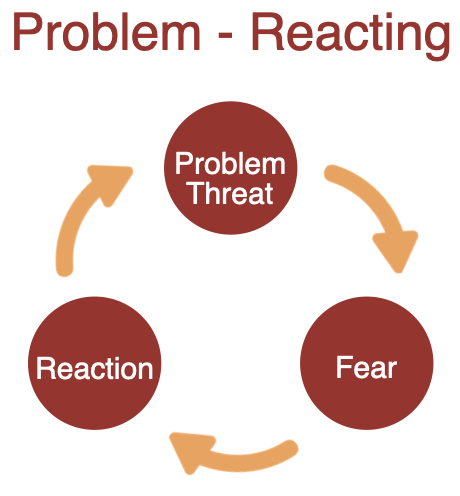
A simplified illustration of the reactive mindset when it detects a problem/threat.
The transition to the Creative hemisphere changes the nature of your leadership. By anchoring your identity internally, your professional worth is no longer up for negotiation during boardroom disputes.
The prize for making this transition extends far beyond personal resilience. Modern corporate environments demand a level of leadership that can navigate constant systemic volatility and deep ambiguity. When you shift your internal focus away from self-preservation, you reclaim the exact mental bandwidth required to operate in this complex landscape. This internal maturity allows you to establish the right conditions for clearer thinking across your entire operation. You gain the courage to bring a healthier challenge to senior tables, no longer constrained by the fear of institutional friction. Free from the weight of self-protection, you can redirect your energy toward resolving structural bottlenecks and delivering sustained progress that results in progress that holds.
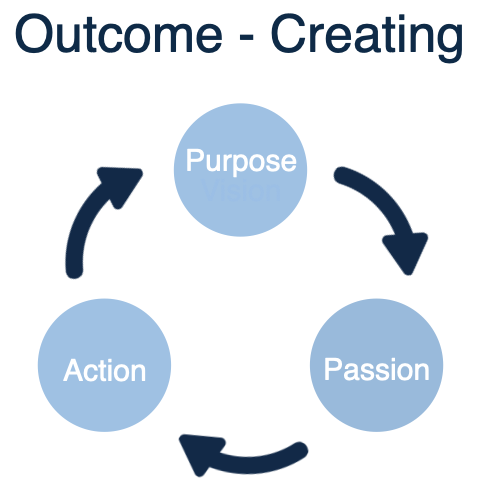
The creative mindset when aligned to purpose.
Practical Application
Review your active strategic objectives for the coming quarter and intentionally reframe your goals away from what you are trying to prevent, focusing entirely on the distinct commercial legacy you intend to build.
Pinpoint one specific area of your business where you have settled for slow progress to avoid corporate friction. Recognising that this stall is a symptom of reactive safety will help you introduce a healthier challenge to that process this week.
Allocate dedicated time for structured reflection to observe your personal triggers so you can choose your actions deliberately, rather than simply working harder at your Outer Game skills.
The "Better Thinking" Question
If your standing within the hierarchy were entirely secure, what decision would you make for your organisation today?
Work with Bywater
Upgrading your internal operating system to align consciousness with commercial competence requires a rigorous, data-driven approach. I work with senior executives and corporate boards across the UK to map their leadership architecture, break through defensive bottlenecks, and achieve sustained progress.